|
-
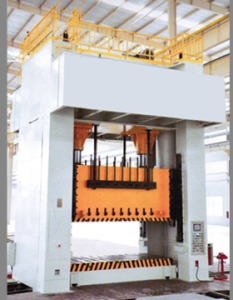
The industry is upgrading towards servo control, intelligence, large-scale production, and greenness. Servo direct drive technology is widely adopted, saving 20% - 50% and achieving a precision of ±0.01mm. It is equipped with industrial Internet of Things, digital twins, and AI vision, enabling automatic feeding, rapid mold change, online inspection, and remote operation. In terms of large-scale production, the domestically produced 80,000-ton die forging hydraulic machine can manufacture ultra
-
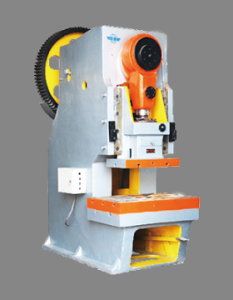
Based on working principles, they can be divided into four categories: mechanical presses (crank drive, fast speed, high efficiency, suitable for thin plate stamping); hydraulic presses (high-pressure hydraulic drive, high pressure, adjustable stroke, suitable for thick plates and complex parts); forging hammers (impact kinetic energy forming, flexible but with large vibration); screw presses (flywheel energy storage, combining striking and compressing characteristics). Core advantages: high str
-
Forging machines are equipment that use pressure to cause plastic deformation of metal billets to manufacture parts or blanks. They belong to non-abrasive processing. The core principle is to utilize mechanical or hydraulic power, combined with molds, to complete processes such as stamping, bending, stretching, and forging. This enhances the internal structure of the metal and improves the strength and toughness of the parts. They are widely used in fields such as automobiles, aviation, wind pow
-
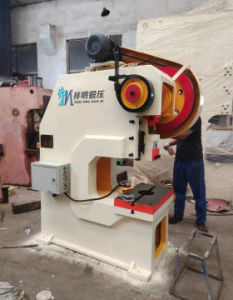
Generally speaking, mechanical presses are characterized by fast production speed, while hydraulic presses provide higher flexibility for more complex molding processes.In this article, we will discuss their differences in mechanism and application.Working principle of mechanical press:As the name suggests, mechanical presses generate power mechanically.Its main motor is connected to a crankshaft, which circulates punches and a flywheel.In a simple mechanical press, the clutch directly controls
-
When the machine is trapped in oil, the manufacturer cannot underestimate it, because the trapped oil will cause pressure shock and cavitation problems in the press, which will affect the normal use of the machine.So how should the phenomenon of oil trapping be solved?Please see below.1. Oil trap occurs in the gear pumpThe enclosed space of the machine becomes smaller, which will cause the trapped oil to be squeezed and the internal pressure will increase, and it will be squeezed out of the gap,
-
Doing a good job of daily maintenance can keep the punch equipment in the same technical state for two months, delay the deterioration process, and detect and eliminate hidden faults in time to ensure normal operation.1. The “four requirements” for the use of punch equipment:1. Cleanliness: the tools, workpieces, and accessories are neatly placed, the protective equipment is complete, the wiring and pipelines are complete, there are no defective parts, and there is no rope binding phenomenon.
-
In horizontal stamping processing, material loss has always been an important issue for suppliers. Today's version summarizes some methods to reduce material loss. Let's take a look at which methods are used.Generally speaking, there are two methods. One is to reduce the loss of materials processed by horizontal presses, and the other is to improve the utilization rate of processed materials. In product planning and processing, the production needs for materials can be met as much as pos
-
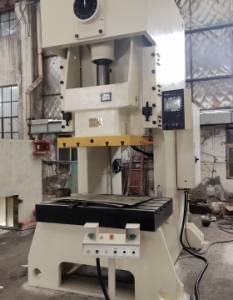
Pneumatic punch clutches generally use composite dry pneumatic clutches. The flywheel has built-in bearings and clutches, and the sealing plate is fixed and combined. When the start control button is pressed, the solenoid valve presses the air into the clutch and transmits the power of the flywheel to the crankshaft for work. Select the kinetic energy button of the control panel to achieve safe movement and continuous stroke work.The slider of the pneumatic punch is a connecting rod and the ball
|
|
 中文
 English